by The HLH Team
Processes are the neural pathways of the brain that is your business. From how you call Clients to counting money, we engage dozens of processes a day… and we never think about them. How many processes happen in your business that you don’t understand or are even aware of? They drive your company and you don’t have the keys.
Process Improvement is about making small, sustained changes to daily details. But that’s a non-starter if we can’t visualize the details.
Here’s how to take control of your processes and start saving some money:
Processes make you Flexible:
How many people in your company manage/ control processes that you don’t fully know? For most companies, it’s a fair number. Now what happens if that person has an accident, goes on maternity leave, or simply quits?
Work with your staff to document their processes. Start with simple, daily processes and go deeper from there. The goal: that if something happens to them, someone else can learn the processes within 1 day. If the process only exist in someone’s head, you’re starting from scratch.
Keep your Processes Efficient:
We think of processes as purely functional, but the truth is that they’re highly personal. People develop and mould them to fit their preferences, even if that’s not most efficient.
It’s your company. You want to empower the people in your company, but you also need to ensure that the processes they’re developing are not:
- So personally crafted that they take more time than they should
- Creating silos and inhibiting interdepartmental cooperation
- So mysterious that someone else can’t learn them within a day

How to Document:
First off, forget Value Mapping. This isn’t about creating vast spreadsheets of complex supply chains. Get a bunch of multi-coloured sticky notes, a fistful of sharpies, and a room that will stay empty for a few days.
Make it collaborative: get all the involved stakeholders into the room with you. Have coffee and fruit and make it lighthearted. They may be thinking that you’re wanting to document what they do in preparation for firing them: address that paranoia head on. It’s about efficiency.
Start simple. Aim to document 3 common, fairly simple tasks in a couple hours (after that no one is thinking straight). Everyone picks a colour of sticky note to represent them. Start with the big steps involved in process and stick them up as headers. Below them you can get into the details. Every step, no matter how small, gets a sticky note of the colour of the person doing it. If there’s 2 people in a step, make 2 steps.
Get as granular as you can and fill up the board. If you do it right, you’ll be amazed at how many steps are involved in the simplest process. Assemble them all before saying anything. Then turn to your people and ask them: “so how can we simplify this?” Then shut up, stand back, listen and let the magic happen.
Integrate into Process Improvement:
An exercise like this should be monthly at most. Improving the bottom line is about making incremental changes that are sustainable over the long term. Only have another session once you’re confident that the lessons of the first have become habit.
Keep the stickies up. This is an organic process, and stakeholders can go in at will to look, learn, and hopefully make even leaner. After about a week, document the strategies into a shared spreadsheet, with accountable names attached to every task. Better yet, put them on a central board in the middle of the office.
I’d go about a month between sessions. If you rush, you’ll fail; that’s the essence of Process Improvement. It might take a year or more to document your business’s most basic processes, but the change in morale, the bottom line, and your piece of mind will be real.
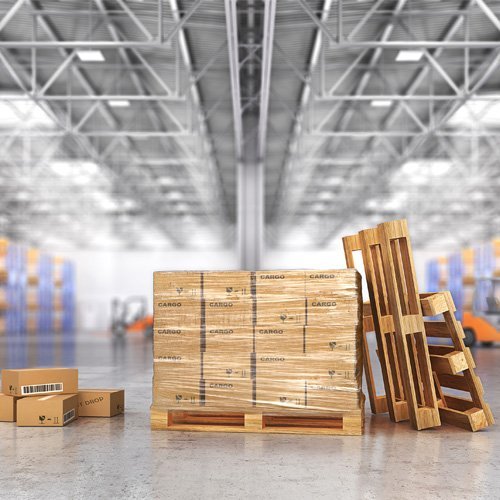
by The HLH Team
Do you feel comfortable? Are you sitting pretty just you can service any order that comes in, no matter what the size? Then you’re playing the dangerous game of Over-Inventory.
Inventory is a tide. As is rises, your ship (the business) is buoyed higher and we stop worrying about the rocks (the inefficiencies) beneath the surface. As we build a “comfort stock” we tie up valuable cash on gambles and lose track of other Wastes that are draining our resources.
General:
Let’s follow your processes. As your raw material moves through the steps to becoming a finished product, more dollars are pumped into it.
Over-Inventory, and Overproduction, it’s nasty cousin, stem from a blend of idealism and disengagement. We fall for the “make it and they will come” myth and, at the same time, crave the comfort of knowing that we’re ready for any sized order.
Raw Material:
Do you shop at Costco thinking it saves you money? Mythbuster: it usually doesn’t once you factor in all the Food Waste that comes from buying bulk.
Same rules apply for your business. Suppliers tempt us with percentages off if we buy in bulk, which sounds like a good idea; you’re going to use it all anyway, right? Wrong. It’s more often a cash-killer.
Buying in bulk clogs up receiving areas, leading to temporary storage popping up and inviting Waste in everywhere. The possibilities of double-handling and potential spoilage (depending on the material, of course) set in.
What’s the lowest amount of inventory you can carry before production grinds to a halt? Can you balance your freight to deliver smaller loads, even if that leads to milk-running? Get close to the rocks; get uncomfortable.

Mid-Assembly:
You’ll have multiple steps in your assembly process (depending on your product). Waste can happen in any of them if you haven’t synced the processes between them.
If one process is faster, the partially assembled inventory will build up and as it accumulates, it’s more likely to get moved, damaged, dirtied, or lost.
Make continuous flow your goal. Sync your processes with each other, so that even if inventory accumulates before the next step, it’s predicted and managed.
Balancing Expectations:
Finished inventory is the biggest Waste. Think of all the money that goes into one finished widget. Now imagine each widget as a frozen chunk of that cash that can only be thawed and used again when bought.
Catastrophic Waste happens when your finished products accumulate to the point of paralyzing your cash flow. Comfort turns to panic on a dime, and product will often need to be discounted to keep operations moving.
You can’t operate with zero finished inventory; when customers call, they expect rapid delivery. But what is the lowest amount you reasonably need? Do the math. What orders can you expect in a month? What is a baseline of unexpected orders to come in? Unless your production process takes a long time, plan to carry less than the baseline.
Make it uncomfortable. Efficiencies will follow.

by The HLH Team
Transportation is the most logistics-oriented waste. It’s the unnecessary movement of materials and, while healthcare isn’t moving tonnes of scaffolding and concrete, the materials being moved are far more precious and delicate.
For sake of comparison between Transportation and Motion waste (the latter traditionally focused on staff), we’re going to zero in on the movement of patients, as well as materials. Healthcare demands that we move patients back and forth and each move required resources. It’s our job to keep asking ourselves whether we’re doing it in the most efficient way possible.
No Value:
Transportation offers no value to the patient. In fact, the longer that any transportation takes, the more potential harm it could cause to patient well-being.
In the medical industry, it’s also one of the wastes that you can cut freely with little restriction from stringent guidelines. More so than other industries, healthcare must navigate complex waters of regulations and red tape when fighting some of the deadly wastes, but this is not so with Transportation.

Running Down Hallways:
This waste starts at the beginning: with building layout. Do you need to travel to the other side of the clinic everytime you need a basic medication?
Your storage room should be located near the centre of the action. If it’s not, consider a smaller, secondary storage space for your staff to grab the basics that they need every day.
If there’s medication you’re using all the time, consider bringing it from the pharmacy to where you need it most to avoid travelling to get it. A lot of transportation waste reduction comes down to listing the materials that you use most and streamlining the logistics to get them where they’re needed.
Moving Patients:
Every time a patient moves somewhere, someone needs to prep the room, show him or her the way, and reset the last room for the next patient. Think about all the reasons why you shuffle and shift patients through your clinic. Are they all necessary?
Do patients have to be moved across rooms because specific equipment isn’t available in the first room? If so, could prep be done ahead of time to prep the first room, based on an estimation of patient needs, so 2 rooms don’t need to be prepped and reset from the start?
Perishable Material:
You can’t afford to move samples and other highly perishable materials more than necessary. Make sure that, when they’re taken, they are moved to a central location in the clinic to be dealt with appropriately from there (ie. moved to the lab or examined in-house).
The Other Kind of Waste:
You’ll generate medical waste as a natural part of your practice. Disposing of it is tightly regulated with strict guidelines for non-compliance. Many healthcare providers use a third party company to ensure proper transport and disposal of their medical waste.

by The HLH Team
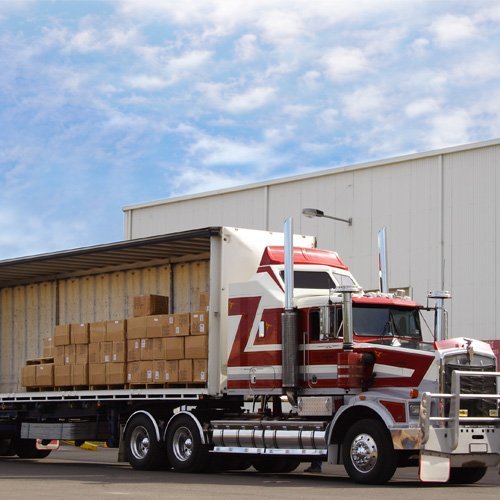
Unlike manufacturing, wherein materials are assembled at home base, construction happens remotely, where literally tonnes of materials are being moved around each day.
Bullets don’t win wars, but logistics do. The same rules apply with construction. If the proper materials aren’t in the right place at the right time, downtime accumulates quickly.
Lean Thinking:
Building a house involves dozens of stakeholder groups all contributing to the whole, while prioritizing their own individual interests. Their logistics are largely their own, because they’re not motivated to collaborate. Lean thinking seeks to pivot the focus toward the value of the project as a whole, rather than its individual pieces. When partners collaborate with more than lip-service, value goes up, cost and frustration go down, and everyone benefits.
If the plumber needs to run to the store, maybe the electrician needs something. Rather than making two separate trips, the two could be tackled at once, saving time. With our current system, a process like this may feel like science fiction. However, if you change the conversation so the “task list” becomes a series of commitments that everyone is engaged with, in order to bring more value to the product, it’s not far off.
Staging Area:
 This sounds self-explanatory, and it largely is, but it can also fall through the cracks when you’re rushing through setup time, trying to get started.
Take the time to map your jobsite, indicating where to stage your equipment, trucks, and materials. Mark your traffic flows and walkways. Ensure your delivery drivers have a reliably open path to the stage to avoid honking, panic, and overall chaos.
Distance Trumps Discounts:
Where are you buying your materials? Often, far away suppliers will tantalize you with discounts, but do your logistical math. If the fuel costs check out, and you’re not having to build up excessive inventory levels (more on that later), it may pay off for your initial shipments.
During the job, however, don’t send your foreman driving 40 km for fill-ins. You’ll always need last-minute deliveries, but there will always be local businesses to supply you. The 20% extra is well worth the cost of saving fuel and keeping a senior person at the jobsite for hours at a time, rather than on the road.

Check the Address:
This is the biggest “facepalm” Waste of them all. It’s also inexcusable in our technological age, and low-hanging fruit for improving Transportation Waste.
You should have zero tolerance for wrong address deliver. Bad handwriting or false inputting should never be an excuse. Your drivers should always confirm the address with someone on-site and take the extra 20 seconds to use Google Maps.
Keep Accurate Logs:
Many stakeholders in any construction project hate paperwork, but if you let your mileage logs fall behind, you’re sending your trucks out blind. It’s a sloppy habit that can easily snowball into massive Waste.
It may not catch up to you for a while, but it will hurt when it does. Roadside breakdowns or failed roadside inspections are profit killers. Even worse is finding yourself replacing critical and expensive equipment pieces because routine maintenance fell behind (due to improper logging). As painful as they may feel at the time, keep up to date with logs and prevent breakdown further along the line.
by The HLH Team
It’s easy to confuse “Transportation Waste with “Motion” Waste. The former is the unnecessary movement of materials, while the latter is the unnecessary movement of people. Manufacturing is full of both.
General:
Transportation Waste happens at every point in the supply chain, from raw material delivery to final assembly. To identify these Wastes, follow that chain and make note of the usual suspects along the way.
Here’s what you’ll find: Waste happens everywhere, but the instances happen less the earlier you are in your supply chain, as they are more costly per instance. However, while it’s more glaringly obvious with half-empty semis, half-full carts can be just as expensive due to increased frequency.
Waste Spin-Offs:
No Waste is an island. Besides wasting time, fuel, and giving you a stress headache, excessive transport can also lead to:
- Over-Inventory: things get stacked up in temporary places only to be sorted through later
- Defects: moving materials leads to dirt, damage, or loss.
- Waiting: the more you shuffle things around, the less likely they’ll be in their designated spot when needed, resulting in waiting.
Start with your Supply Chain:
This begins with thinking of where to set up shop, but continues throughout the life of your business. How close are you to your vendors? If it’s excessive, and you’re back and forth often, is it worth paying little more upfront for closer suppliers? Don’t assume: do the math.
Half-full trucks are a glaring Waste. Find partners to share, even if that’s with a competitor (only if your vendors ensure confidentiality, of course).
Don’t fear the milk run. We assume that direct routes are more efficient and they often aren’t. When that trailer full of raw materials lands at your dock, is it going to gum up your processes to store it all?

How’s your Storage?:
Transportation Waste tends to be more obvious in receiving rather than production.
You’re getting regular deliveries. Are the trucks being unloaded into temporary storage that you’ll need to move again later, or are they going directly from first storage point to production? Plan for the latter, unless a small storage area at point of production is necessary (see below).
How full are your carts? Are your forklift operators driving with half-loads when they could be full? Always opt to maximize your transport efficiency between processes, especially if it’s a longer distance. There’s a caveat though: sometimes loading the last third of that cart involves waiting or motion waste that kills the efficiency.
Keep your lanes clear. If you have to weave around piles of temporary storage and random clutter, you’re wasting resources in so many ways. Paint lines for runways to keep clear between processes, if you have to.
Your Production Area:
Whether you’re making cars or crayons, your job is to assemble raw materials into a finished product in the most efficient way possible. When a worker frequently needs raw material, anything further than an arm’s length away is wasteful.
Are all materials close-at-hand when needed? If not, what’s the process in getting them from storage to the production area? If you’re bringing raw material over in tiny batches often, ask yourself if it would be beneficial to establish a smaller storage area at the point of production.
This tactic is closely tied to Motion Waste. Once you bring your raw materials closer, you can zero-in on the steps and movements your workers need to take.