
by The HLH Team
The Batching Myth:
 You’re stuffing envelopes. You have 500 letters to fold, envelopes to stuff and seal, stamps to stick, and addresses to write. You’ve got 2 other people to help you and you delegate tasks accordingly.
You all want to get it done as quickly as possible. Your intuition tells you that if you fold them all at once, then stuff them all at once, etc, the work will go faster. Right?
Wrong. A key lesson in Process Improvement is that batching slows down production. This runs counter to “how we’ve always done it,” but the evidence is clear. Here’s why:
- You reduce the excessive motion waste that’s caused from moving batches to and from storage and to the next steps
- You produce finished products faster, which heightens morale and gives people a sense of accomplishment early
- Your customer gets the finished product in their hands faster than if they have to wait for an entire batch.
- No one is waiting around. With batching, workers down the line spend much of their time idle and waiting for the previous steps to be completed.
Want to learn how you can apply this method to your workflow? Let’s Chat!
What’s your Takt Time :
Decreasing the completion time for a task or process is at the heart of Process Improvement. We can’t do it unless we’re brutal with waste. When we work in batches, a couple things happen that increase our overall production time:
- Workers who are down the production line are idle while the batch slowly makes its way from one step to the other.
- Batching leads to inventory build up, while single-piece-flow is conducive to customer-pulled production
Small improvements add up to big savings. Switching to single-piece-flow, and eliminating all the wastes of batch processing, can speed up your production time by a whopping 30%.
Cash is king, and faster production times mean that you get paid sooner. Having quicker cash flow can open new options for your company about how to grow.
More than Manufacturing:
While “Lean” is often thought of as a manufacturing concept, its concept applies to every industry. Bankers, builders, butchers and beauticians all need to eliminate waste to be profitable. Every industry, whether making widgets, performing tasks or dealing with files, have the choice to batch or not to batch.
 While single-piece flow saves time, it often requires a significant cultural shift to embrace it. The batching instinct is engrained in our collective corporate ethos. It takes significant managerial will to commit to making the changes necessary to fundamentally shift practice.
Once achieved, however, single-piece-flow yields lower inventories and storage, increased flexibility, less defects, and higher overall morale.
by The HLH Team
“He (or she) who has no problem has the biggest problem of all.”
– Taiichi Ohno
The House that Leadership Builds:
A lot of managers have a “Lean” vision for their company. Most of them fail, not because of lack of energy or talent, but because they didn’t achieve buy-in at the ground level.
Darril Wilburn was a leader in the development and implementation of key leadership programs for Toyota. Now a Managing Partner at Honsha, an internationally respected Lean Leadership consulting group. He approaches Lean, or Process Improvement, through the lens of leadership.
It’s easy to sit in a board room and develop a company vision over coffee. The mistake happens when we think that’s sufficient. It’s only the first step.
Making a vision that’s developed in the board-room relevant to the front line is a leadership challenge. Buy-in at the top is often relatively easy, but harder as you move down the levels:
Organizational
Management
Team
Individual
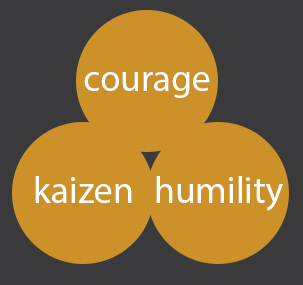
Engaging individuals is not about vision boards; it’s about on-the-ground leadership. According to Wilburn, there are 3 qualities that a leader needs to embrace in order to foster worker-level buy-in.
Learn more about what it takes to be a leader of Lean: Lean Leadership
Courage:
 Visions for Process Improvement happen in a caffeine-induced board-room euphoria of what is possible. Holding onto that vision over time, so that the end goal is as clear on day 500 as day 1, takes deep courage. You can’t have a lean organization without the courage of conviction.
Disillusionment is a normal part of organizational change, but if you don’t hold the vision, stubbornly at times, when those around you start calling for the next-best-thing, your company will remain stuck in a feedback loop of failed endeavours.
Get valuable management tips delivered weekly: Send Me Tips!
Humility:
Courage is vital, but it must be tempered with humility. The smartest people in the room are usually the ones asking the best questions, because they have both the humility to accept that they don’t have all the answers and the courage to show it.
Leaders with a drive to learn make the best teachers. You’ll rarely find them squirreled away in their corner offices; they’re on the floor and in the trenches, learning from whoever they can learn from and teaching in return. Their humility, driven by their desire to understand, makes them a conduit of vision.
Kaizen:
Big changes don’t tend to be profitable over long term. They start out strong because everyone is enthusiastic, but fizzle when, not having been integrated into daily routine, the enthusiasm supporting them fades.
Kaizen, or Continuous Improvement, is about making small changes, consistently. This gives each change time to be integrated into daily habits and, over time, leads to stable, sustainable efficiency improvement.
Without the proper balance of courage and humility, a leader cannot effectively implement Kaizen. Small changes happen at ground level. As such, all employees must feel engaged and empowered for Kaizen to work. Leadership in the trenches, with the courage of vision and the humility of listening, is the key to massive improvements developed over time.
(inspired by the teachings of Darril Wilburn)

by The HLH Team
“Bet on the people who think for themselves. “
― D. Michael Abrashoff, It’s Your Ship: Management Techniques from the Best Damn Ship in the Navy
Captain of a Sinking Ship:
 What’s your nightmare business situation? How about being put in charge of a company with terrible productivity, a grumbling team, and the worst performance records in your industry. What would you do?
That happened to Michael Abrashoff. At 36, he became the youngest commander in the U.S. Pacific fleet. The bad news was that his ship, the USS Benfold, was as abysmal as the hypothetical company mentioned above. But in 12 months, he turned it into the #1 ship in the navy. So, what did he do?
How Abrashoff turned his ship around has lessons for all leaders, whether in the navy or business. His philosophy: Everyone wants to excel at his or her job. The leader’s job is to give them the opportunity to do so.
Learn how to become a better leader – Send us an email
“What would you do? It’s your ship!”:
Abrashoff began his 2 year command with the assumption that every one of the crew wanted to succeed. If they didn’t it was on him.
He sat with the 310 strong crew and asked 3 questions:
“What do you like most about the USS Benfold?”
“What do you like least?”
“What’s one thing you would change?”
These three questions are immensely powerful. They have the power to draw out hidden inefficiencies that only the team members can see. If you ask them, and (far more importantly) take ownership of the answers, you’ll start your team working towards a unified purpose.
Abrashoff believed that, as Captain, he served the crew. During lunches on the deck, he and the officers went to the back of the line. They ate with the crew. They shared stories and jokes, and the crew began to know them as people and not ranks.
When your staff members come to you with a problem, what do you say? Do you dismiss their concerns and anxieties or, wanting to be a good boss, solve problems for them? Abrashoff challenged them with, “What would you do? It’s your ship!” By not allowing himself to become a crutch, he empowered them to think for themselves. In doing that, he gained the gift of their perspective.
Want actionable management advice? Give us a shout
Don’t Keep Painting the Ship:
 We know what salt water does to metal. Every couple of months, the Benfold has to be repainted to cover the rust. It took a month. Imagine if you had to close your business every 2 months, for a month, and to spend money in that time on maintenance that you had to do again and again. How profitable would you be?
Does leadership matter? Consider this. A sailor, who had painted the Benfold countless times, felt able to approach Abrashoff with a question. It was the bolts that rusted, so what about replacing them with stainless steel bolts? The mark of a good leader is the fact that his staff feel able to speak up about what bugs them.
By replacing the bolts, time between re-paintings went from 2 months to 10. The navy quickly adopted the practice, saving millions.
If that sailor hadn’t heard, “it’s your ship,” over and over, he wouldn’t have asked. If an employee doesn’t feel valued, he or she will not say what’s bugging him or her. If team members don’t speak up, your business will not improve. It’s up to you, as leader, to ask those 3 crucial, empowering questions and own the answers.
original photos from: https://investingcaffeine.com/2009/11/06/too-big-to-sink/
by The HLH Team

by The HLH Team
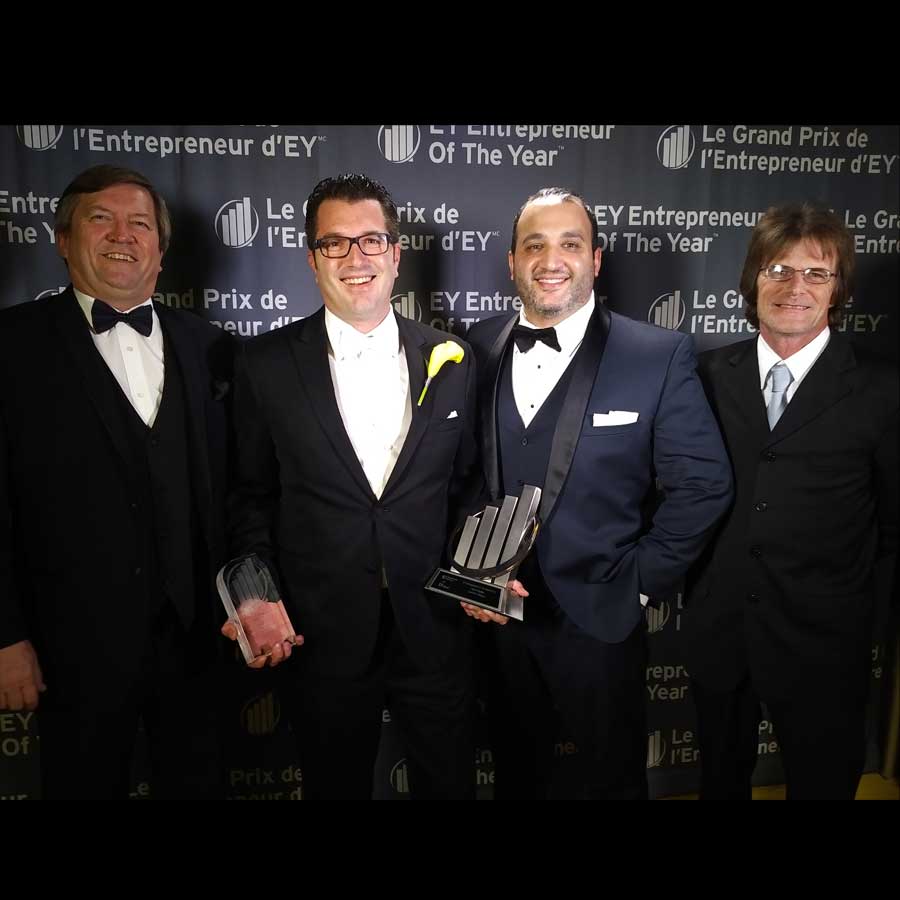
Receiving an EY Entrepreneur of the Year award is a business milestone that few achieve. This year, Coventry Homes’ CEO, Henri Rodier, was honoured with the EY Entrepreneur of the Year award in the Business-to-Consumer Products & Services category. We recently had the privilege of sitting down with him to discuss his company, legacy and connections to the community.
 Also awarded Top New Home Builder in Edmonton for 2016, 2015, and 2014, Coventry is a 40 year old company with 4,000 new homes to its name. Its success story goes back to the 1970s and has been driven by Henri’s vision every step of the way. Henri and Coventry are involved in the local community, through both their sponsorship of the Edmonton Oilers and their involvement with the Edmonton Humane Society. Henri shows us the value of deep community commitment. Coventry’s long standing dedication to the Oilers covers the gamut from in-arena ads to clients being able to order a custom “Oilers cave” in their basement; a product that no other builder offers.
The ‘Paws and Claws’ Gala is one of the Edmonton Humane Society’s biggest fundraisers and has raised $800,000 to date. It’s presented by Coventry, and we can tell that Henri takes enormous pride in being able to give so much back to his community. “We are local,” he said, “We are Edmonton and area.” As a CEO, his appreciation for the community that has helped make his company successful runs deep.
Henri’s personable nature and humility stood out in our interview. He spoke with the perspective that only decades of experience can give; about his company and our local boom-and-bust economy. When asked about the recent downturn, he smiled and indicated that this was the fourth such recession Coventry had been through. “Downturns,” he said, “are the times when you can make the most progress and when you have the best opportunities.” Perhaps it is this entrepreneurial spirit that the judges for the EY Entrepreneur of the Year awards saw in Henri and has helped shape the company’s story of success throughout the years.
When asked about his influence on Coventry, Henri’s humility again took centre stage. For a man whose influence shaped a highly successful company over the last few decades, he chose not to remark about himself. Like a true leader, he gave all the praise to the team at Coventry that he has worked alongside all these years, including his professional advisors. Henri talked about succession planning after 40 years at the helm of Coventry. A 5 year plan in the making, the succession plan was nearing completion and Trevor Lukey, a partner with HLH that has worked with Henri for years, “was a big part of it”. Trevor, he said, “was instrumental in guiding me through the way I should be looking at it financially.”
When asked what he would do when he retired, Henri simply smiled, looked around his office and said, “this is exactly what I want to do.” A true entrepreneur at heart, Henri has the perspective that being retired means enjoying the freedom to do exactly what you want. Looks like he’s found it already.
Visit the Coventry Homes Website