by The HLH Team
“ It was fry or jump, so I jumped. “
Andy Mochan
Section 1:
On a July evening in 1988, the Piper alpha oil-drilling platform in the North Sea exploded. 166 people lost their lives in the inferno. One of the 63 survivors was Andy Mochan.
The alarms woke Andy up and he barely escaped his quarters in time. Injured, he made it to the platform’s edge and looked down. 15 stories below him, the water burned with oil. In the frigid waters, he knew he had 20 minutes, maximum, to live.
Two thirds of the rig had already melted in the fireball and disappeared. Andy’s choice was the certain death of staying, or the probable death of jumping. He jumped, and he lived.
From Tragedy to Metaphor:
Andy’s story is one of courage in the face of unthinkable danger, and resolve driven by unimaginable choice. The tale has been turned into a powerful metaphor for illustrating the moment of decision in organizational change.
 Daryl Conner, an international leader in organizational change, coined the term “burning platform” after watching Andy’s interviews on the news. In Andy’s ordeal, he saw glimpses of what went through his clients’ minds when confronting the choice between imminent disaster and probably failure.
While executives confronting change don’t risk being burned alive, they often have their businesses and livelihoods staked on the decisions they make. Connor refers to a burning platform as a crucible moment in change management.
A burning platform isn’t any organizational change. Connor established certain criteria to ensure that only the most critical situations qualify:
- There is a real and immediate crisis that cannot be ignored.
- There are a limited number of difficult choices.
- The choices are irreversible.
- All choices have a high chance of failure.
Want to learn how you can apply Process Improvement techniques to your business? Let’s Chat!
4 Types of Burning Platform:
The metaphor has gone viral, and is now taken up by Change Managers and Business Leaders worldwide. As often happens, virality has changed the original intended definition.
To Conner, the key element of a burning platform is not danger, but resolve. A crucible moment need not be “do or die” to a life or a business. The moment of fundamental organizational change is defined more by the commitment of our choice rather than the degree of peril.
There are 4 kinds of burning platform moments in business. The more “current” the threat or opportunity is, the easier the decision and commitment tend to be:
Current Problems: Your business is confronted with an imminent threat and you need to make a choice. This mirrors Andy’s story.
Current Opportunity: You have the chance take a leap and grow your business. Making the decision is often the easy part here; maintaining the commitment is the hard part.
Anticipated Problem: The threat is inevitable, but not imminent. You need to make a resolved decision in order to prevent future disaster.
Anticipated Opportunity: The most abstract, and thus the hardest to commit to with sustained resolve. There is an inevitable, but not imminent, opportunity. If you change now you can be in position to seize it.

by The HLH Team
The Batching Myth:
 You’re stuffing envelopes. You have 500 letters to fold, envelopes to stuff and seal, stamps to stick, and addresses to write. You’ve got 2 other people to help you and you delegate tasks accordingly.
You all want to get it done as quickly as possible. Your intuition tells you that if you fold them all at once, then stuff them all at once, etc, the work will go faster. Right?
Wrong. A key lesson in Process Improvement is that batching slows down production. This runs counter to “how we’ve always done it,” but the evidence is clear. Here’s why:
- You reduce the excessive motion waste that’s caused from moving batches to and from storage and to the next steps
- You produce finished products faster, which heightens morale and gives people a sense of accomplishment early
- Your customer gets the finished product in their hands faster than if they have to wait for an entire batch.
- No one is waiting around. With batching, workers down the line spend much of their time idle and waiting for the previous steps to be completed.
Want to learn how you can apply this method to your workflow? Let’s Chat!
What’s your Takt Time :
Decreasing the completion time for a task or process is at the heart of Process Improvement. We can’t do it unless we’re brutal with waste. When we work in batches, a couple things happen that increase our overall production time:
- Workers who are down the production line are idle while the batch slowly makes its way from one step to the other.
- Batching leads to inventory build up, while single-piece-flow is conducive to customer-pulled production
Small improvements add up to big savings. Switching to single-piece-flow, and eliminating all the wastes of batch processing, can speed up your production time by a whopping 30%.
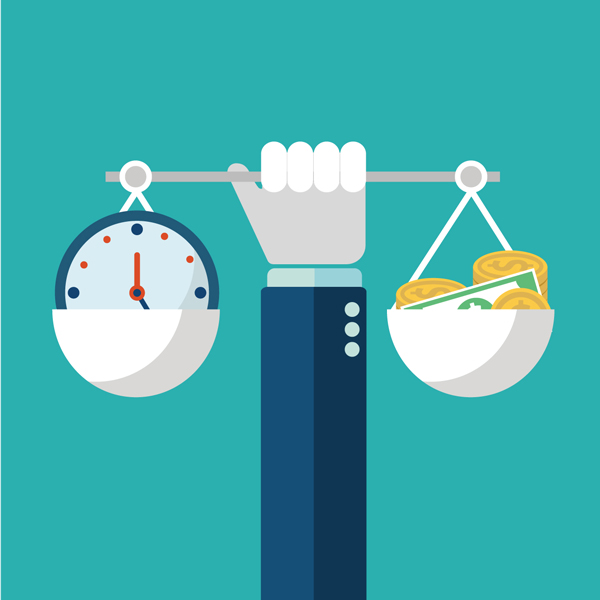
Cash is king, and faster production times mean that you get paid sooner. Having quicker cash flow can open new options for your company about how to grow.
More than Manufacturing:
While “Lean” is often thought of as a manufacturing concept, its concept applies to every industry. Bankers, builders, butchers and beauticians all need to eliminate waste to be profitable. Every industry, whether making widgets, performing tasks or dealing with files, have the choice to batch or not to batch.
 While single-piece flow saves time, it often requires a significant cultural shift to embrace it. The batching instinct is engrained in our collective corporate ethos. It takes significant managerial will to commit to making the changes necessary to fundamentally shift practice.
Once achieved, however, single-piece-flow yields lower inventories and storage, increased flexibility, less defects, and higher overall morale.
by The HLH Team
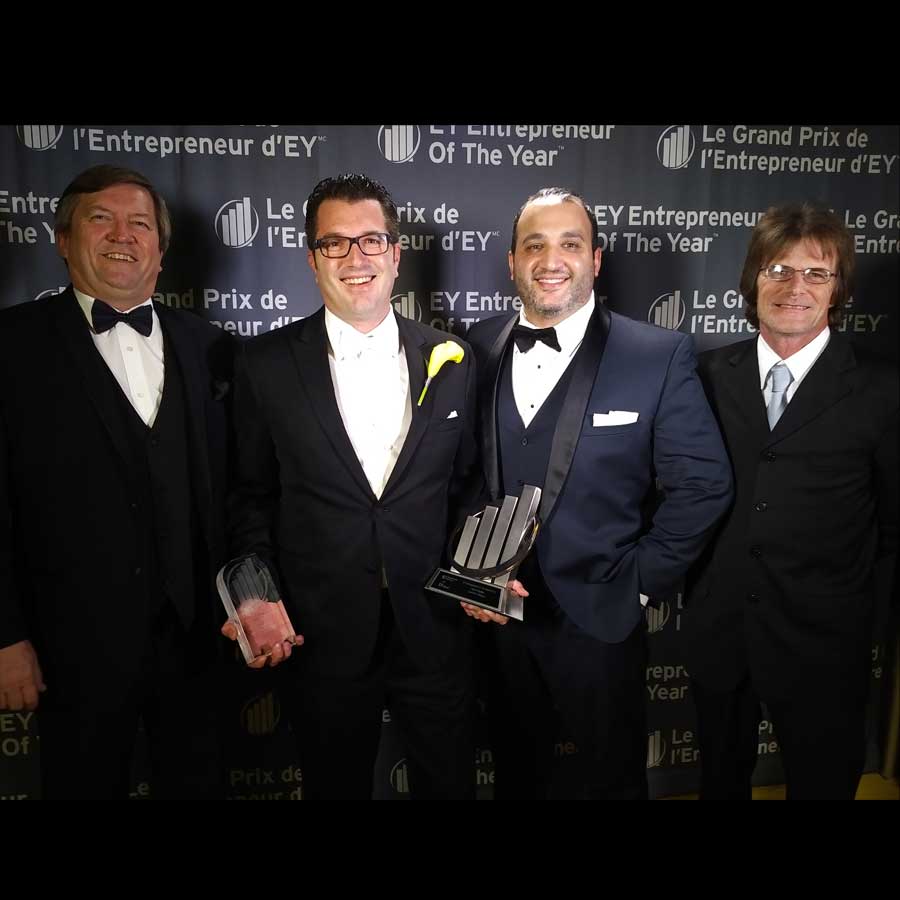
Receiving an EY Entrepreneur of the Year award is a business milestone that few achieve. This year, Coventry Homes’ CEO, Henri Rodier, was honoured with the EY Entrepreneur of the Year award in the Business-to-Consumer Products & Services category. We recently had the privilege of sitting down with him to discuss his company, legacy and connections to the community.
 Also awarded Top New Home Builder in Edmonton for 2016, 2015, and 2014, Coventry is a 40 year old company with 4,000 new homes to its name. Its success story goes back to the 1970s and has been driven by Henri’s vision every step of the way. Henri and Coventry are involved in the local community, through both their sponsorship of the Edmonton Oilers and their involvement with the Edmonton Humane Society. Henri shows us the value of deep community commitment. Coventry’s long standing dedication to the Oilers covers the gamut from in-arena ads to clients being able to order a custom “Oilers cave” in their basement; a product that no other builder offers.
The ‘Paws and Claws’ Gala is one of the Edmonton Humane Society’s biggest fundraisers and has raised $800,000 to date. It’s presented by Coventry, and we can tell that Henri takes enormous pride in being able to give so much back to his community. “We are local,” he said, “We are Edmonton and area.” As a CEO, his appreciation for the community that has helped make his company successful runs deep.
Henri’s personable nature and humility stood out in our interview. He spoke with the perspective that only decades of experience can give; about his company and our local boom-and-bust economy. When asked about the recent downturn, he smiled and indicated that this was the fourth such recession Coventry had been through. “Downturns,” he said, “are the times when you can make the most progress and when you have the best opportunities.” Perhaps it is this entrepreneurial spirit that the judges for the EY Entrepreneur of the Year awards saw in Henri and has helped shape the company’s story of success throughout the years.
When asked about his influence on Coventry, Henri’s humility again took centre stage. For a man whose influence shaped a highly successful company over the last few decades, he chose not to remark about himself. Like a true leader, he gave all the praise to the team at Coventry that he has worked alongside all these years, including his professional advisors. Henri talked about succession planning after 40 years at the helm of Coventry. A 5 year plan in the making, the succession plan was nearing completion and Trevor Lukey, a partner with HLH that has worked with Henri for years, “was a big part of it”. Trevor, he said, “was instrumental in guiding me through the way I should be looking at it financially.”
When asked what he would do when he retired, Henri simply smiled, looked around his office and said, “this is exactly what I want to do.” A true entrepreneur at heart, Henri has the perspective that being retired means enjoying the freedom to do exactly what you want. Looks like he’s found it already.
Visit the Coventry Homes Website
by The HLH Team
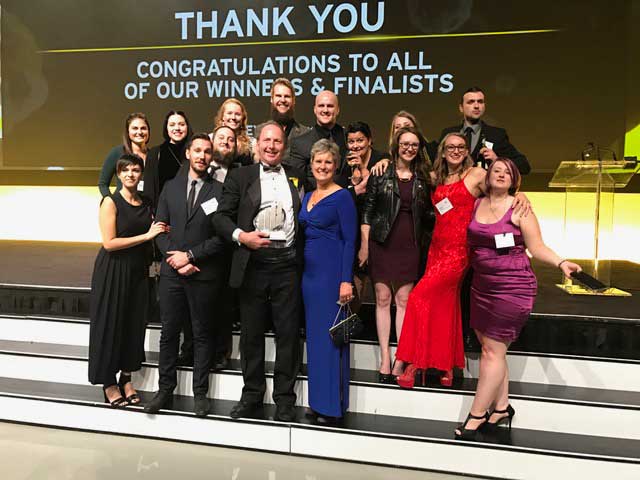
The Ernst and Young awards are the Olympics of Entrepreneurship. Awarded annually in Calgary, they recognize companies that have climbed into greatness one innovative rung at a time. Winning one is a big deal, and this year 20% of the winners were clients of HLH.
 This year, the “Health and Wellness” award went to Fitter International Inc., home of Fitterfirst. Fitter, and its impassioned Founder and President, Louis Stack, makes balance and stability products for workplaces and homes.
Louis is a true entrepreneur. A dedicated downhill ski racer, Louis was sidelined with an injury in 1984 and was desperate to get off crutches, regain his balance after multiple surgeries and get back onto the hills.
With $3000 borrowed from his single-parent mother, he and his brother built the first working prototype of the Pro Fitter 3D Cross trainer. It caught on, and his business journey began.
I chatted with Louis about Fitter’s mission, the honour of their award, and HLH’s impact on the company. The interview was an invigorating glimpse into Louis’s vision not just for his company, but for all the people his company impacts.
“Toothbrushes for Balance”
 You don’t start brushing your teeth once you have a cavity, explained Louis. Their effectiveness comes from us using them in our daily routine. It’s the same with balance. Fitter’s products enhance balance and stability daily, along with all the associated health benefits.
Louis introduced me to his friend, S.A.M.: “Practice Stability in daily living to improve Agility at play and to enhance Mobility for life.” It’s his success blueprint, and captures the core idea that if we incorporate balance into our daily routine, we’ll be able to play harder and enjoy more freedom for longer.
Fitter will go into workplaces with an arsenal of core building chairs, standing boards, and adjustable desks. The office they outfit take workplace wellness seriously, and tend to reap increased productivity as a result.
Visit their website to see their line of products: Fitter Website
Louis Stack’s Story: Speed, Balance, and Aging Gracefully
Not your Typical Accountant
 If you’ve ever met Bob Hahn, you know that he’s unlike any other accountant. A fellow entrepreneur, he discovered Louis in 2002 and the two hit it off.
Like Louis, Bob puts vision first. Louis describes him as a dynamic and dedicated to Fitter’s success. He wasn’t just passionate about the business, but about the products, as well. You’ll find Fitter products around every corner of HLH, and ideas of workplace wellness permeate across the office.
Louis reiterated what I’ve often heard about Bob, namely that he connects with innovators on a deep level. He “gets” entrepreneurs and offers tools to help them make sense of their company’s financials so that they can make better decisions. It’s about more than balance sheets with Bob; it’s about digging into the numbers and finding out where to cut, shift and grow to save money overall.
Watch The Awards Video: