by The HLH Team
“He (or she) who has no problem has the biggest problem of all.”
– Taiichi Ohno
The House that Leadership Builds:
A lot of managers have a “Lean” vision for their company. Most of them fail, not because of lack of energy or talent, but because they didn’t achieve buy-in at the ground level.
Darril Wilburn was a leader in the development and implementation of key leadership programs for Toyota. Now a Managing Partner at Honsha, an internationally respected Lean Leadership consulting group. He approaches Lean, or Process Improvement, through the lens of leadership.
It’s easy to sit in a board room and develop a company vision over coffee. The mistake happens when we think that’s sufficient. It’s only the first step.
Making a vision that’s developed in the board-room relevant to the front line is a leadership challenge. Buy-in at the top is often relatively easy, but harder as you move down the levels:
Organizational
Management
Team
Individual
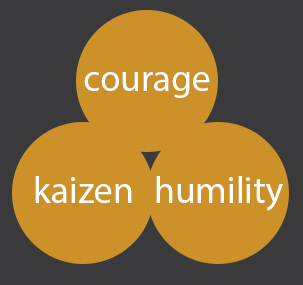
Engaging individuals is not about vision boards; it’s about on-the-ground leadership. According to Wilburn, there are 3 qualities that a leader needs to embrace in order to foster worker-level buy-in.
Learn more about what it takes to be a leader of Lean: Lean Leadership
Courage:
 Visions for Process Improvement happen in a caffeine-induced board-room euphoria of what is possible. Holding onto that vision over time, so that the end goal is as clear on day 500 as day 1, takes deep courage. You can’t have a lean organization without the courage of conviction.
Disillusionment is a normal part of organizational change, but if you don’t hold the vision, stubbornly at times, when those around you start calling for the next-best-thing, your company will remain stuck in a feedback loop of failed endeavours.
Get valuable management tips delivered weekly: Send Me Tips!
Humility:
Courage is vital, but it must be tempered with humility. The smartest people in the room are usually the ones asking the best questions, because they have both the humility to accept that they don’t have all the answers and the courage to show it.
Leaders with a drive to learn make the best teachers. You’ll rarely find them squirreled away in their corner offices; they’re on the floor and in the trenches, learning from whoever they can learn from and teaching in return. Their humility, driven by their desire to understand, makes them a conduit of vision.
Kaizen:
Big changes don’t tend to be profitable over long term. They start out strong because everyone is enthusiastic, but fizzle when, not having been integrated into daily routine, the enthusiasm supporting them fades.
Kaizen, or Continuous Improvement, is about making small changes, consistently. This gives each change time to be integrated into daily habits and, over time, leads to stable, sustainable efficiency improvement.
Without the proper balance of courage and humility, a leader cannot effectively implement Kaizen. Small changes happen at ground level. As such, all employees must feel engaged and empowered for Kaizen to work. Leadership in the trenches, with the courage of vision and the humility of listening, is the key to massive improvements developed over time.
(inspired by the teachings of Darril Wilburn)

by The HLH Team
We’re always trying to change our businesses for the better. Whether strategic or not, we’re tweaking procedures, brainstorming ideas, and thinking about how to improve the bottom line.
In the last article, Your Company Is An Iceberg PT. 1/2, I compared your business to an iceberg. The top tip of icebergs are well defined and beautiful. The bottom bulk, hidden beneath the waves, is what guides the ‘berg. The well-defined tip is just along for the ride.
For change to really matter, we need to go deep. Let’s strap on the diving suit and take that journey together. Bring the flashlight; it’s dark down there.
(Click To Enlarge Infographic):

– ( “Iceberg” idea inspired by Rick Torben https://www.torbenrick.eu/ )

by The HLH Team
You have a vision for the future. You jump in, bring in guest speakers, talk it up to the team, and everything goes well for the first couple weeks. Then it falls flat. The change you envisioned gets diluted into more of the same. What happened?
 Effective change brings vitality, enthusiasm, and often higher profits to businesses. But it doesn’t happen overnight. 70% of all change initiatives fail and often for the same reasons. Here are the top 5 reasons why, so you can plan for success:
1) You bit off more than you can chew:
Idealism drives change. We develop a vision for what our business can look like, we develop a plan, and we go for it. The tricky part of having a vision is sensing how to portion it out into winnable pieces.
Don’t try to get to “Z” and skip “A” through “Y”. That will overwhelm your team and lead to all around frustration. To achieve your final goal, develop a timeline with smaller, actionable goals along with way.
To build buy-in, position some “low-hanging” wins early on. Small, quick wins will build up momentum for the bigger challenges ahead.
2) Your team hasn’t bought in:
If your team isn’t invested in your change initiative, it’s probably going to fail. At best you’ll need to work harder to convince your staff members about the project’s value; at worst you’ll encounter open sabotage.
Tips To Getting Your Team On Board
Be open every step of the way. Try to be sensitive about the things which you may not think about very often but are foremost on their minds, like job security and the anxiety of new technologies. As excited as you are, they’re equally nervous that you’ll start this and then dump on their shoulders to execute.
Make yourself available by not just opening your door, but coming out of the office and spending informal, casual time in the hallways and break rooms. As anyone who attends conferences regularly will tell you, the “real work” happens in informal settings.
3) Poor planning:
Planning your change initiative is a balancing act. On the one side, you want to line up actionable goals and give the team some quick initial wins. On the other hand, meticulously planning every step can lead to paralysis.
Barriers will happen, and timelines will change. You’ll have to adapt your plan, and then adapt it again. While your planning needs to be about the details, make sure to leave room to learn from your results, improve and repeat as you go.
4) Lack of sustained commitment:
We all love starting new projects. The idealism creates a sense of excitement that seems to push the project forward on its own. It’s a great feeling, but even as we embrace it we need to know that after the excitement comes the work.
For your change initiative to succeed, leadership needs to be committed to change not just the business’s processes, but its culture. Managers need to engage stakeholders for their ideas and feedback, both positive and negative. Effective change isn’t something that you can “get the ball rolling” on and go back to your office.
5) Expecting Instant Success:
The path to effective change is neither linear nor always upward. Most change initiatives follow a “curve”, a pattern wherein morale starts high then dips dramatically as initial momentum wanes and the real work begins. You’re bound to expect a period of anxiety and uncertainty in the project; it’s very normal.
Achieving change that lasts over the long haul takes time. You’ll encounter barriers you didn’t think you would, have frustrations you didn’t think you’d have, and your team will look to you to show vision when it matters most.

by The HLH Team
The idea of wasting employee talent came late to the deadly wastes. In the original Japanese version, there were 7 muda. It wasn’t until the methodology was brought into American factories that “Talent” was added. Our employees are our single greatest and most wasted asset. When an employee bites their tongue about an idea, refuses to think for themselves or spreads rumors, the loss can’t be measured as easily as a defective product or part that needs repair. But as any manager, who has taken employee engagement seriously will tell you, the benefits of your staff caring more about their company are massive.
Untapped Ideas
How often have you paid for an external “expert”, who had very little experience with your business, to advise you
on how to run your business? Chances are that whatever idea that expert had, your employees had that same idea a while ago, but were either never asked or didn’t feel empowered enough to speak up about it.
Continuous Improvement is about ripping down silos and making your company open to new ideas and empowering all employees to think of ways to make the processes in their work day more efficient. This is easier said than done and often requires a fundamental shift in how management interacts with employees on a daily level.
Empowering is not about making fancy policy. It’s about relationships that are built with consistent interaction and involvement with employees. You can’t tackle wasted talent from the executive suite. It needs to be done in hallways and break rooms and workspaces, and it needs to be consistent.
When an employee comes to you with an idea, it’s your job to make that person feel that coming to you was the right choice. If you don’t like the idea, take the time to tell him or her why instead of dismissing it and walking away. This is a huge disincentive to an employee who genuinely wants to help the business succeed.
Finding a Balance
When we hire someone, it’s usually to fill a certain gap in the company, either because someone else has left or expansion demands it. Once people fill the gaps they were hired for, we’re often reluctant to offer them opportunities that would allow to them to grow beyond that gap. It makes sense to build company structures that employees need to fit into, but it’s also important to balance structure with individuals’ potential capacity to grow beyond their roles. Stagnation in a role can often lead to attitude and morale problems.
Employees that are over or under qualified for their jobs is a key cause of talent waste. Being under-qualified (i.e. being thrown in over your head) can lead quickly to feeling overwhelmed, frustrated, and potentially could cause expensive defects.Being overqualified for a job has the obvious waste of paying too much in salary than the job is actually worth. Often highly paid staff will be reluctant to delegate jobs they’ve “always done” even as they grow beyond them.
by The HLH Team
Establishing a company culture of Lean is about empowering the people behind your processes: the staff.
Fostering collaboration and teamwork can be the secret ingredient to better margins. Daily team meetings are a great way to start that journey.
Need more than good intentions:
Your first tip for implementing consistent and effective team meetings is: keep this article. Why?
Because here are the 5 steps of what happens to most companies that put team meetings in place:
1) Initial enthusiasm about how awesome this new meeting format will be! The excitement is infectious and everyone is on-board.
2) You establish a reliable schedule and things flow nicely for a while. It’s working!
3) The meetings become routine and enthusiasm wanes. Topic drift happens. You learn more about your HR manager’s car trouble than wasted resources in your company.
4) The meetings lose their sense of purpose. All you can think about is how much they’re costing you in lost work time, and you throw up your arms and disband them.
5) You hear about an amazing new format for team meetings! See #1 and repeat.
So keep this article. Pin it to your bulletin board and read it during #2 and #3 to get back on track. Setting up a consistent flow for team meetings takes time.
It won’t happen in a week, but keep true to your goal and agenda and it will happen.
Elements of an Awesome Team Meeting
The best time is first thing in the morning. Give people 15-30 minutes to shake off the sleep, check emails, and get past commuters’ road rage.
Stand up. When we sit down it’s like someone flips us into a lower gear. Our energy changes and nursing our coffee mug becomes a matter of life and death.
Standing embodies energy and readiness.
A lot of companies follow Pavlov’s example and use an audio cue to start meetings. Playing the same upbeat song, at the same time, will remind people office-wide to join the circle. Make it early enough in the morning that people won’t be on client calls yet or in meetings.
If you have a Kanban board (the multi-coloured sticky note whiteboard), make it your focal point.
Kanbans make processes transparent and create accountability; that’s what lean meetings are all about!
No phones. Period.
Beware of topic drift! Make everyone understand that this is not the forum for Saturday night recaps or sick cat laments. Be a strict enforcer of people staying on topic.
You’ll feel like a schmuck at first but people will get the point quick. Everyone will thank you for this in the end.
Make sure someone takes minutes. The duty can rotate but it’s essential.
Documented accountability always trumps the “I think I remember that being assigned to me, maybe… sort of.”
Above all: make it fun. Start with a joke and keep the atmosphere lively, enthusiastic, and collaborative.
It’s a crisp start to the day that reinforces a sense of team, opens communication, and makes people feel listened to and empowered.
Is it Effective?
If you stick to the agenda and engage staff, you’ll have effective meetings.
Knowing if they’re engaged or not, unless you’re lucky enough for your staff to be painfully honest, is about body language.
Are they looking the Team leader in the eye? How bout each other’s eyes? Are they standing farther from each other?
Is their gaze glazed over as they think about coffee or what their phone is doing?
If you’re the boss, set the example by making it a priority. Don’t wander in late or skip it because you’re working on a project. Be a part of the team by being within the group; don’t reinforce old and unprofitable hierarchies by looming above it. See my last post on Lean Leadership for more on this topic.
The true test of its effectiveness will be the office culture. Within a few weeks you should notice increasing collaboration, employee feedback to management, and productivity overall. Be resolute in the meetings and you’re a solid step closer to making Process Improvement a systemic part of your company culture.